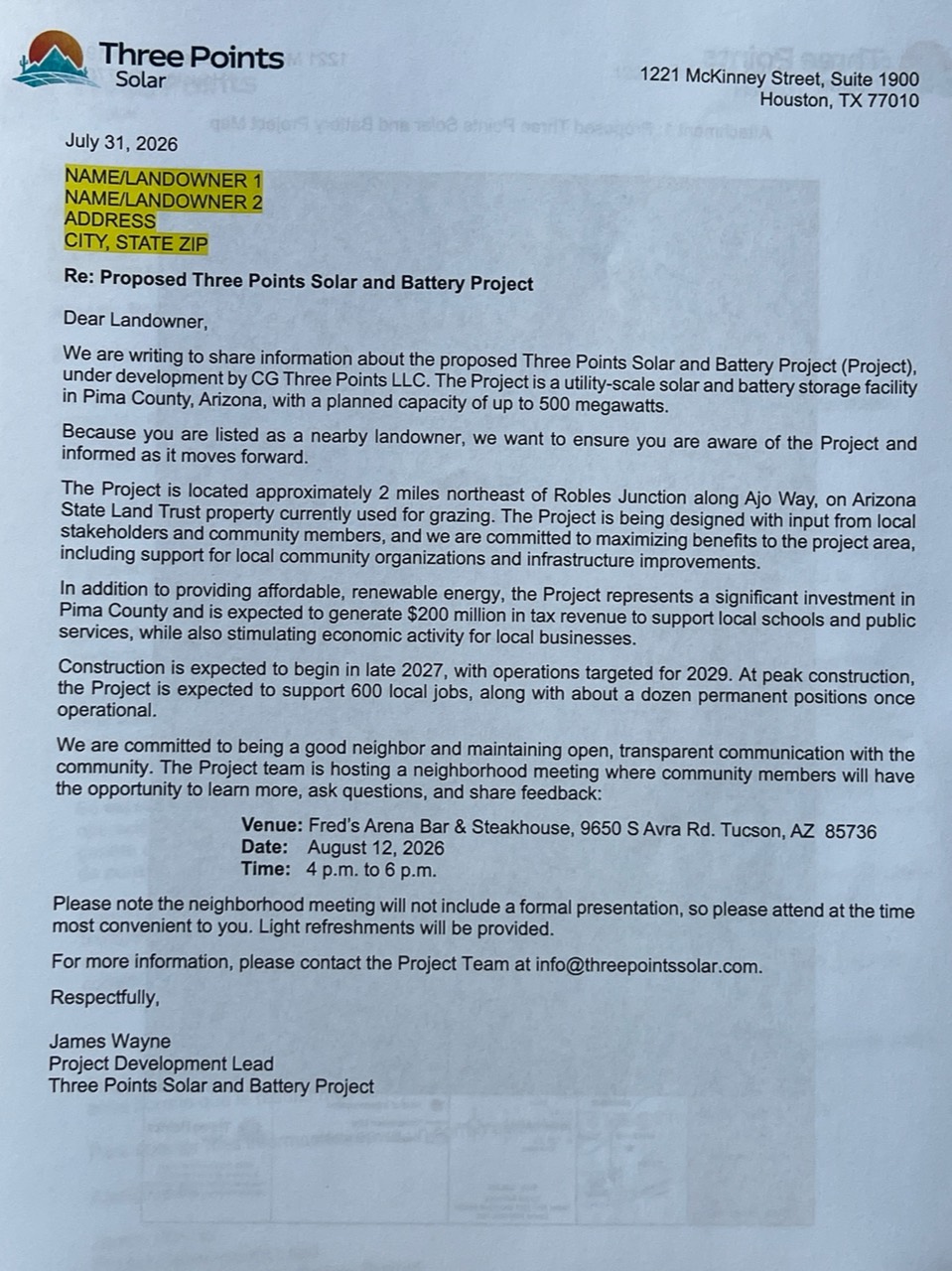
English Notice
Landowner notification letter
Developer notice dated July 31, 2026, with the project meeting details.
Protect native habitat.
Thousands of acres of open Sonoran Desert near Robles Junction and Three Points could soon face a Conditional Use Permit request for an industrial-scale solar project. This land is not empty. It is wildlife habitat, open desert, rural landscape, and part of what makes Southern Arizona worth protecting.
This effort is about protecting precious wildlife habitat and keeping Robles Junction from becoming an industrial solar field.
Next community meeting: Wednesday, October 21, 2026, 6pm, at Serenity Baptist Church.
Our Position
We are not against solar. We are for putting it in the right place, where the land can handle it and the people who live nearby want it.
Recent Updates
Members of the alliance report that Tetra Tech crews have been in the area doing environmental survey work for Repsol/CG Three Points. That means the permit information could drop at the county level at any time and start the clock on public hearings.
Please politely and accurately voice your opposition to the proposed solar farm and ask every supervisor to protect Robles Junction, Three Points, rural communities, and open desert habitat.
Find Supervisor Contacts
English Notice
Developer notice dated July 31, 2026, with the project meeting details.
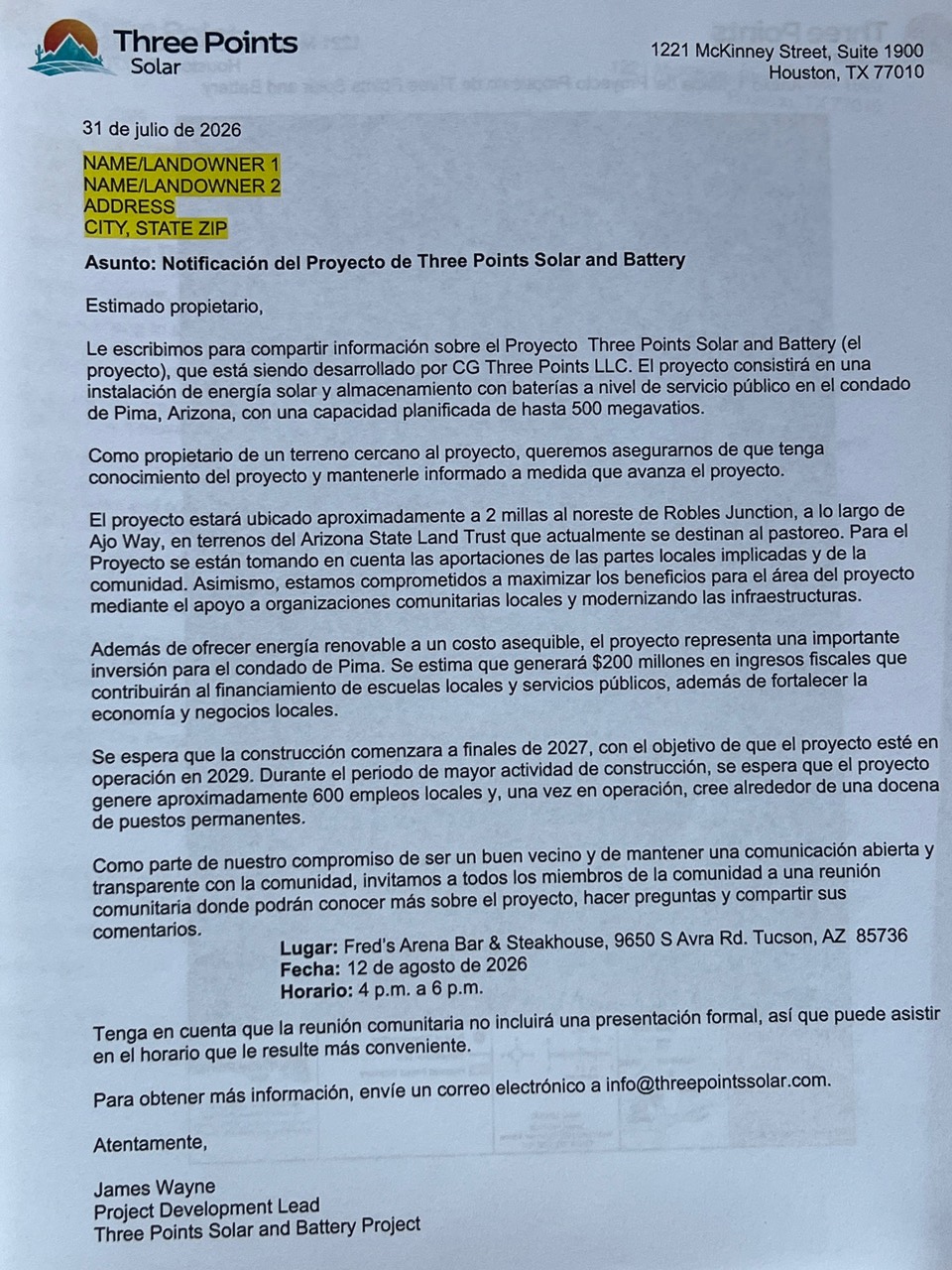
Spanish Notice
Spanish version of the notification sent to nearby landowners.
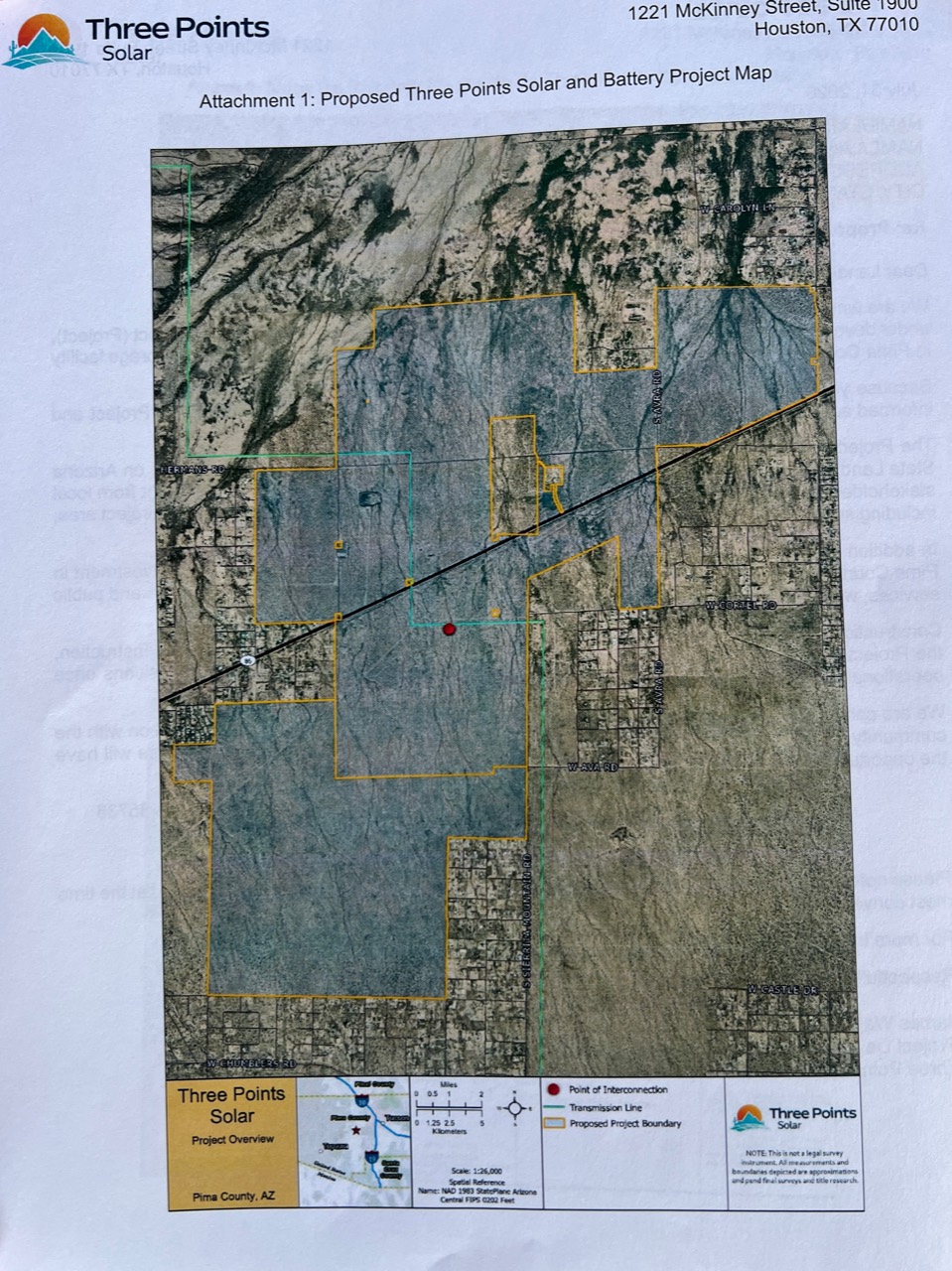
Project Map
Map attachment showing the project overview and boundary near Robles Junction.
Meetings
Community Q&A
Join neighbors for a community question-and-answer meeting about the proposed solar project and what residents can do next.
Why This Place Matters
The land around Robles Junction and Three Points is more than vacant acreage on a map. It is part of a larger desert landscape shaped by native grasses, ironwood, mesquite, cactus, seasonal blooms, wildlife movement, rural communities, open views, and the natural character of Southern Arizona.
Mule deer, javelina, raptors, reptiles, pollinators, and countless desert species depend on a living plant community of native grasses, ironwood, mesquite, palo verde, cactus, shrubs, and seasonal wildflowers. Once habitat is broken apart, it rarely returns to what it was.
Families in this area chose open skies, quiet roads, dark nights, and room to breathe. A project of this scale would permanently change the character of the surrounding community.
This landscape includes washes, grasslands, ironwood and mesquite stands, cactus, shrubs, and seasonal blooms that hold soil, shelter wildlife, and help the desert recover after rain.
The Issue
The project may soon move forward as a Conditional Use Permit (CUP) request at the county level. Once filed, that could start the clock on public hearings where residents need to be ready to show up and speak clearly.
The proposed Repsol project would convert thousands of acres of open desert and rural land into an industrial energy facility. This is not a small neighborhood project, and it is not a temporary use. A permit request of this size could reshape the future of this landscape.
Alliance members have reported Tetra Tech environmental survey activity for Repsol/CG Three Points in recent weeks. That field work is a warning sign: permit details could be submitted at any time.
This land supports wildlife habitat, open views, rural neighborhoods, and the natural character people associate with Southern Arizona. Once a place like this is industrialized, the decision is difficult - and often impossible - to undo.
We oppose any permit approval that would put an industrial solar field on precious habitat that should remain open, connected, and alive.
Now is the time to learn what is being proposed, contact county decision-makers, and help protect this habitat before hearings begin.
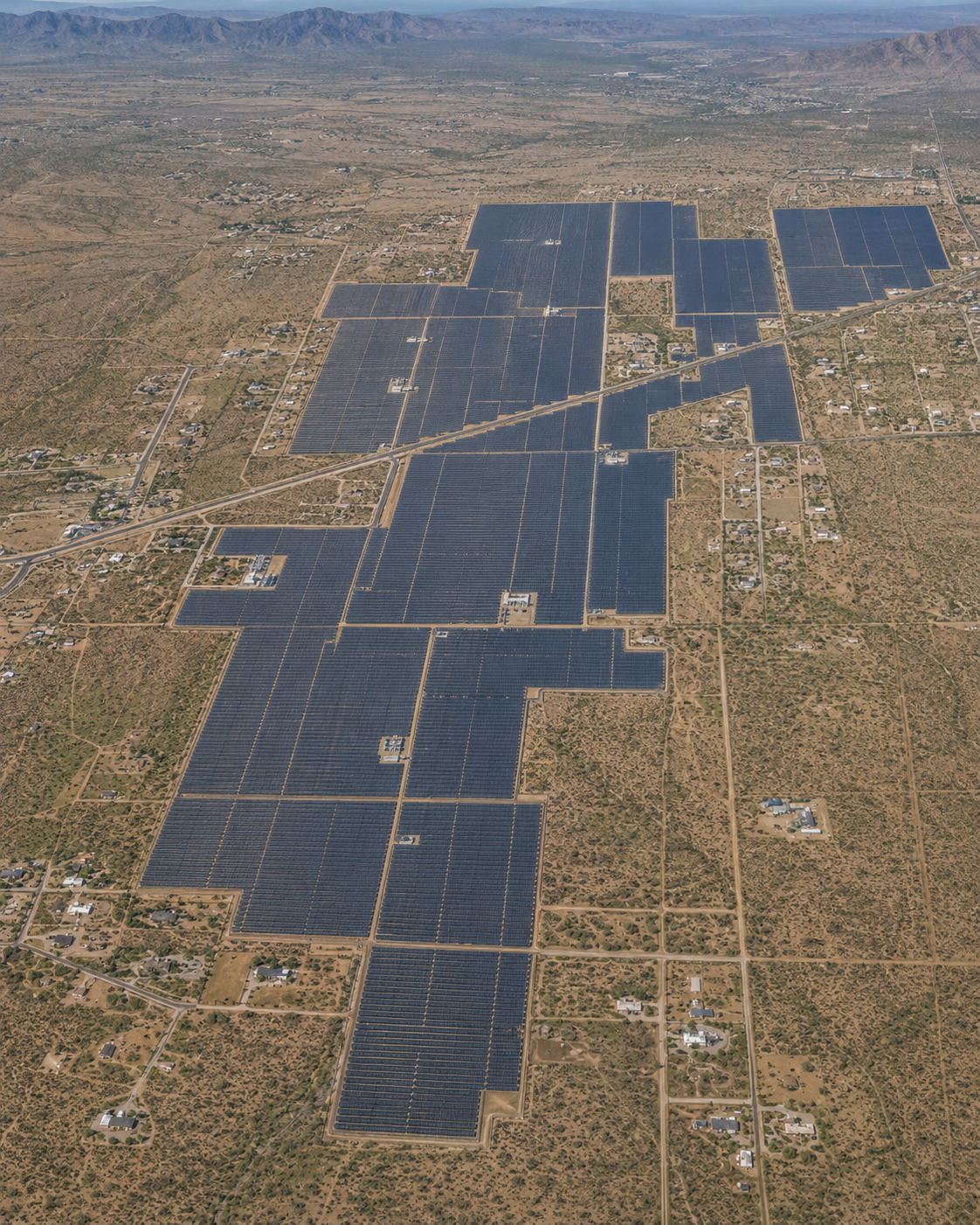
What Is At Stake
Project proponents may seek a Conditional Use Permit for industrial-scale solar development.
The scale and location would permanently alter open desert and nearby rural communities.
Open desert supports native wildlife, movement corridors, scenic character, and community life.
What We Believe
Open Space Alliance believes the open spaces and wildlife habitat that make this region unique should not be sacrificed for an industrial solar field.
Wildlife & Conservation
Southern Arizona's open spaces are living landscapes. They provide food, shelter, movement corridors, and seasonal range for native wildlife. Mule deer and other species do not move according to property lines or zoning boundaries. They depend on connected land.
When large open areas are fragmented, wildlife is pushed into smaller and more stressful spaces. Roads, fencing, grading, lighting, and industrial infrastructure can all change how animals move, feed, and survive.
Some places carry value beyond what can be built on them. This open habitat is one of those places.
Once open habitat is gone, it is hard to get back.
Mule Deer Habitat
Long before roads, utility corridors, or zoning maps, mule deer moved across Southern Arizona's valleys, washes, and grasslands. These landscapes give wildlife room to feed, shelter, travel, and survive between mountain ranges.
For many Arizonans, seeing mule deer at sunrise or watching a small group move across an open wash is part of what makes this place feel like home. It is a reminder that wild spaces still exist close to our communities - and that they are worth protecting.
But habitat does not survive in isolated pieces. When open land is broken apart by large-scale development, wildlife loses more than acreage. It loses connection, movement, cover, and safety.
This effort is about protecting a living desert landscape and the native species that were here first.
Some places should remain open because they are already serving a purpose.
What We Oppose
We oppose the proposal because of its scale, location, and long-term impact on open space, wildlife habitat, and nearby rural communities.
This project would not just place solar panels on unused land. It would transform a large open desert landscape into an industrial energy site. That kind of decision deserves careful scrutiny, public input, and a serious look at better alternatives.
Some places should stay open. Some projects need better locations.
Join the community meeting, review the maps, and help neighbors understand what is at stake.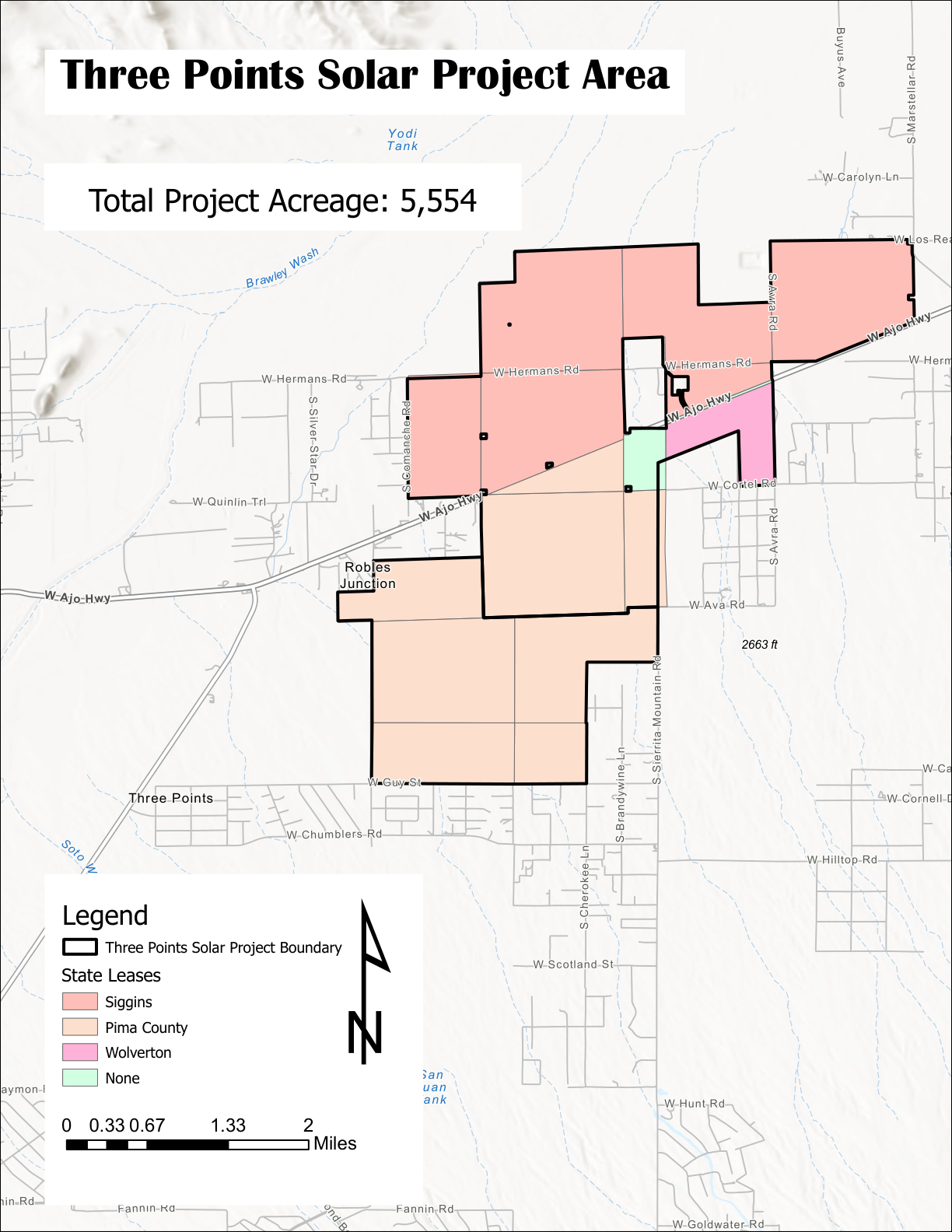
Protect Habitat
The open desert around Robles Junction and Three Points is habitat. It supports mule deer, desert species, open views, dark nights, and the rural character of the surrounding community.
A solar field of this scale would bring grading, fencing, roads, lighting, and industrial infrastructure into a landscape that is still open and alive.
Once habitat is broken apart, it rarely returns to what it was. The decision before the Board is whether this open desert should remain habitat or be permanently converted into an industrial energy site.
Robles Junction should remain open habitat, not an industrial solar field.
Get Involved
A formal hearing is not on the calendar yet, but project proponents may seek a Conditional Use Permit at any time. Residents, neighbors, conservation voices, and everyone who cares about protecting habitat should understand what is being discussed now.
Help protect open space, native habitat, and rural character in Southern Arizona.
I oppose turning Robles Junction into a giant industrial solar field.
Add your name if you believe native habitat, rural communities, and open desert near Robles Junction should be protected from industrial-scale solar development.
Join neighbors for a community Q&A at Serenity Baptist Church.
Get updates on meeting dates, project changes, community events, volunteer needs, and ways to help plan.
Call every Pima County supervisor. Ask them to protect native habitat and keep Robles Junction from becoming an industrial-scale solar field.
Stay ready for future hearings, agenda updates, and public meetings if a CUP request is filed.